Showing posts with label Inquiry. Show all posts

Monday, May 29, 2017

Building Our Own Seismograph

4HR is building seismographs that are affordable, accurate, and sensitive for countries that can't afford fancy computer seismographs. Our first step to collect information that will help us design accurate and sensitive machines.


Finding out:
Handout

What could be more accurate? What could be more sensitive?

What did we find out about seismographs? What are they made of?
Connects to base ten number system, in that the Richter scale works in powers of ten - Jamie
Steady and stable - Zaaviar
The paper would go around a wheel, with an axle in the middle. - Sarah
Wood plank needs to be smooth. Paper needs to be tight. - Connor
Platform: use cardboard. - Emily
Ink: when the paper keeps on moving, the writing instrument keeps writing. - Mason
The height of the weight and the weight of the weight. If the weight is super heavy, it wouldn't show small movements because it is held down. If it is lighter, it would show the smaller movements. - Sean
Vertical metal rod and steel wire. - Victoria
Platform: use cereal boxes, put something heavy in it. - Carmen
Platform: wood, because you can drill into it. - Amaan
Platform: tile. - Sean
Ball and pencil hung from rod. - Carol
Inverted pendulum seismometer: pencil suspended on a metal rod, adjusted to change the pendulum, so it can be more accurate. When the ground shakes, the pencil shakes, drawing on the paper. Wavelengths converted on the Richter Scale: lines on the paper. - ZY
You need a weight to make it stable. - Miguel
Measures how big the Earth's movement. - Elin
These seismographs connect to pendulums, except they don't move and stay in the same spot. It picks up the vibration of the surface, which causes the pencil or pen to move. - Caimi




Thursday, November 10, 2016

Finding inspiration


4HR is beginning our journey as Realistic Fiction authors. The first step is to find ideas that make us passionate about writing. Ideas that we are called to write! Today we are looking at how other authors, like Kate DiCamillo, get their ideas and organize (or don't organize their ideas!).

Let's watch this video where Kate DiCamillo is honest about mistakes, rejection, and where she gets her ideas. In your writer's notebook, write down 3 - 2 - 1

3 Thoughts or ideas
2 Questions (for Kate DiCamillo or authors)
1 Piece of advice for you as an author

Friday, June 3, 2016

A Day in the Life of an ISKL Student

To investigate how Where you live impacts how you live, 4HR watched documentaries about a day in the life of children in Thailand and Vietnam. But there was no documentary on Malaysia! We decided to make movies that show how the natural, capital and human resources of Kuala Lumpur affect our daily lives. Take a look!


And Afterschool and Weekends!

Our feedback:

What went well:
-the editing process
-the timeline
-timing of audio and video

What we would change:
-equal collaboration
-quiet room for recording
-audio difficulties
-keeping on task
-keeping to agreements

What we learned:
-what impacts our lives
-video and audio in YouTube
-collaboration on YouTube
-pros at tech

Thursday, March 17, 2016

3-2-1 Multiplying Fractions

4HR completed a Visible Thinking Routine about multiplying fractions. We recorded 3 thoughts or ideas, 2 questions, and 1 simile about multiplying fractions before we began learning about this concept. Here are some of thoughts, questions and similes.

Thoughts
I think the answer will get smaller when multiplying fractions.

It might be easy, it might be hard.

I think multiplying fractions is the same as multiplying. Adding and subtracting fractions were the same as with whole numbers.

Questions
Would it be the same or similar to multiplication with whole numbers?

How do we multiply fractions?

Similes
Multiplying fractions is like looking at yourself in the mirror because you double yourself.

Multiplying fractions would be as easy as doing nothing.

Go to this LearnZillion lesson to see what we did next!


Thursday, February 4, 2016

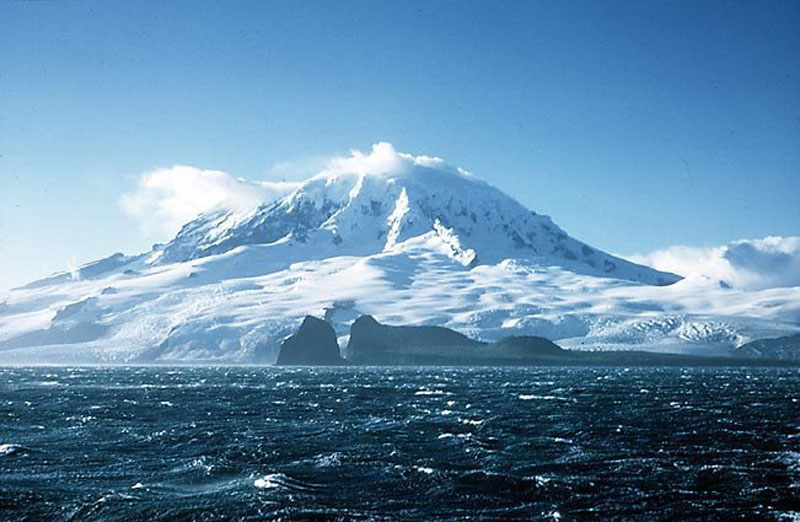
Volcanoes in Snow?


Yesterday, scientists aboard a research ship witnessed Big Ben, a volcano in Antarctica, erupting. 4HR discussed the following:

-Are volcanoes linked to hot weather? How can there be a volcano in the snow?
-What comes out of the volcano? It looks like steam or ash.

Watch the video here to see and learn more.

Monday, January 25, 2016

Studying Earth's Structure

4HR has started learning about the Earth's structure. We will spend time in class reading and studying the different layers, and for homework, keep learning more! Use the suggested resources below:

BrainPop - has an excellent video explaining the different layers, as well as a timeline game that teaches you about geological discoveries and advancements!


KidsGeo - quick video about the layers. Read on to learn about the crust!

WatchLearnKnow - this video goes beyond the layers of the Earth if you are interested in knowing about Pangea and plate tectonics.

And lastly, here is our favorite resource: Journey to the Centre of the Planet!


Make sure to learn as much as you can and record it on your See Think Wonder note taking sheet. On Friday, we are going to use this knowledge to make Earth models!

Thursday, December 3, 2015

Learning from a Physicist

Today 4HR spoke with Dr. Anthony Boyd via Skype. He is a physicist who works at a Naval Research Laboratory near Washington, DC. He talked with us about how he became a physicist, what his work day looks like, and answered our questions.


This is what we learned today:
- For a short time, we are stronger than gravity (lifting foot off ground)
- If there was no gravity, there would be no friction. The exception is in space when planets can rub against each other.
- If there is too much friction, we can't move.
- If there is no friction,  you would slide a lot.
- Friction always works in an opposite direction.
- There is a relationship between the moon and tides.
- Gravity is stronger than friction
- Gravity is an attractive force, so it pulls not pushes.
- We need to gravity to stay down.
- Even if the mass is different, in space objects falls at the same rate.
- You can fit more than 1,000 Earths inside Jupiter.
- There is only one kind of gravity. Sometimes it is safe, sometimes it is dangerous.
- People can't combine their strengths to push ourselves to space.
- Floods are connected to high tide and low tide.
- If there was no gravity, it would be hard to breathe because dust particles would stay in the air.
- We are pulling against the Earth, but since the Earth's mass is so much greater, the Earth pulls us.
- Momentum doesn't help us gain acceleration, but it does help us gain velocity.
- We need a lot of space to get out of the Earth's gravity.
- Distance affects gravity and mass affects gravity.
- When an object is falling, air resistance is pushing up against the object. When there is larger surface area, there is more air resistance.


Wednesday, October 21, 2015

Tuning in to Forces and Motion


Question: How could you move a ping pong ball one meter without using your hands?

Today 4HR delved into science. We designed, hypothesised, constructed, revised, tweaked, and tested our constructions. 

Key vocabulary we used were: weight, speed, momentum, gravity, slant, ramp, roll, bounce, incline, decline, launching, touch, friction, push, pull, hit, stretch, elastic, and rubbery.

Watch these videos to find out the thinking behind our constructions.


Tuesday, September 22, 2015

Sorting Out Information about Beliefs and Values


Yesterday, we found out some key information about the three major religions in Malaysia: Hinduism, Buddhism, and Islam. Today we are going to be using BrainPop to answer our individual questions.

1) It is important to identify your curiosities.

2) Then choose a video that you think will give you more information.

3) Record this new information on your note taking sheet.

What did we learn?
Adam: Does Ravanna control all 10 of his heads? Or do his heads have different souls. Ranvir told me Ravanna controls all his heads.
Jacob: When/where did these religions originate? Hinduism (1,500 BC) and Buddhism (4th or 5th century BC) in India, Islam in Saudi Arabia (610 -632 AD)
Linh: Where does the swatik come from? India, but I am curious about where in India.
Colin: What do Hindus celebrate? Diwali, Deepavali
Beckett: Why is Buddhism one of the largest in numbers? It spread to China from India, so a lot more people believe.
Jack: How many types of thilaks are there? Ranvir showed me two.
Rea: What does Aum or Om mean? It is a Hindu symbol and comes from India.
Juliette: What does the swatik mean? It is connected to __________.
Leila: What is Hinduism? It is a religion that some Indians practice.
Aron: What do we call people who don't believe in gods or supernatural? I found out they are called atheists.
Alicia: Why do we celebrate Deepavali? To remember the return of the ancient king Rama and his defeat of Ravanna.
Mikaela: Why do Hindus wear thilak? Ranvir told me it shows respect to the gods and on praying days and celebrations.
Joshua: Why is Hanuman so important? Is Hanuman the monkey king? I found out Hanuman is the monkey king, and he is important because he helped Rama to defeat Ravanna.

Still curious about:
Linh: Where does the swatik come from?
Tessel: Why do most Hindu gods have an animal?
Jack: I am wondering if there are more than two types of thilaks.
Rea: Where does Om come from in India?
Leila: What is Buddha?
Julie: What animals do Hindu gods have?
Alicia: Why did they chop of Ganesha's head and replace it with an elephant?
Ranvir: Bhaidooj, what is this? I saw it on BrainPop.


Friday, September 4, 2015

The Story of One


The Story of 1 (One the number) from OReilly on Vimeo.

Here is the video we have been watching on place value. It will help us understand how the base 10 number system is used to represent numbers and number relationships.

Think about the questions we have been investigating:

What are numbers? 
How is the base ten system organized?


Wednesday, August 12, 2015

Learning about our Intelligences

4HR has been learning about What Kind of Smart Are You? First Ms. Shand came in and taught us about the different kinds of smarts. We learned that there are 8 kinds!

Our next step is to investigate more into one kind of smart. That way we can share our knowledge with others! We are going to use the MISO model to help us find out more.

M - media, like books, movies, magazines, newspapers

I - interviews with an expert

S - surveys

O - observations

Using information from these four sources, 4HR will report back on what we learn about our smarts, during our Grade 4 performance!